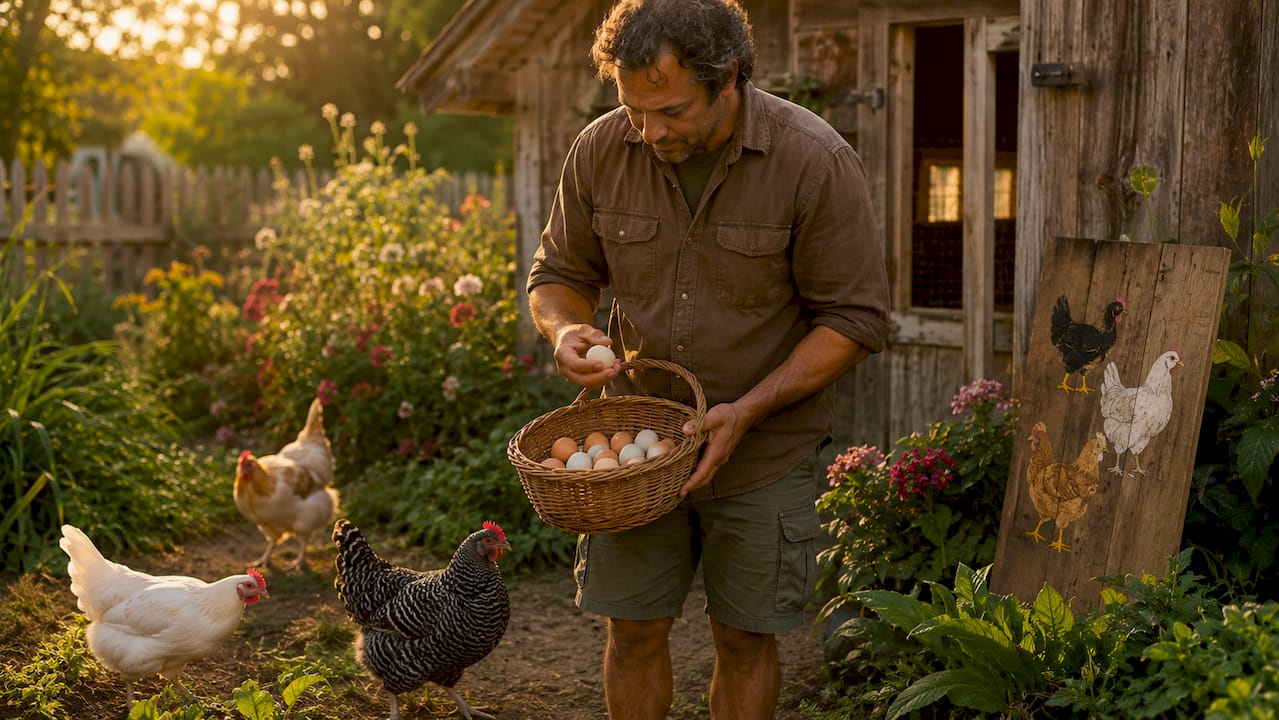
Most people picture a hatchery as a massive industrial building full of conveyor belts and thousands of eggs. That image is not wrong, but it tells only part of the story. Small hatcheries are quietly doing some of the most important work in local food production, especially here in Hawaiʻi where food security depends on what we can grow and raise ourselves. In this guide, we break down exactly what a small hatchery is, how it works, and why it matters for farmers and homesteaders across the islands who want healthy, locally raised birds on their land.
Key Takeaways
| Point | Details |
|---|---|
| Small hatcheries support local farms | They provide accessible, adaptable poultry options without industrial scale or minimums. |
| Lower capacity means flexibility | Small-scale hatcheries can adjust orders and breeds for farmers’ specific needs. |
| Local adaptation boosts success | Hatcheries in Hawaiʻi can offer chicks better suited to local climates and conditions. |
| Community learning and resilience | Small hatcheries enable hands-on education and strengthen regional food systems. |
What is a hatchery and how does it work?
A hatchery is more than just a building with eggs in it. As defined in the agriculture field, a hatchery is a facility that uses artificial incubation to hatch avian eggs or other species’ eggs into young animals. That single sentence covers a lot of ground. It means someone, or something, is doing the work a broody hen would normally do: keeping those eggs at the right temperature and humidity until they hatch.
Artificial incubation works by mimicking the conditions under a mother bird. The key variables are:
- Temperature: Most poultry eggs incubate best between 99°F and 102°F depending on the species
- Humidity: Typically 50 to 55% during incubation, rising to 65 to 70% in the final days before hatch
- Turning: Eggs need to be rotated multiple times a day to prevent the embryo from sticking to the shell
“The difference between natural and artificial hatching is not just equipment. It is the level of attention, record-keeping, and consistency that determines your hatch rate.”
Modern incubators handle turning automatically. Smaller units may require manual turning, which means checking in on your eggs two or three times a day. It sounds like a lot, but once you get into the rhythm, it becomes second nature.
Here is a quick overview of incubation periods for species commonly raised in Hawaiʻi:
| Species | Incubation period | Ideal temperature |
|---|---|---|
| Chicken | 21 days | 99.5°F |
| Duck (Pekin) | 28 days | 99.5°F |
| Turkey | 28 days | 99.5°F |
| Quail (Coturnix) | 17 to 18 days | 99.5°F |
| Goose | 28 to 35 days | 99°F |
The egg-to-chick process follows a predictable path. Fertilized eggs are collected, cleaned gently, and placed in the incubator. Candling, which means shining a bright light through the egg, lets you check development around day 7 and day 14. Unfertilized or non-viable eggs are removed. On the final days before hatch, eggs move to a separate hatcher unit where humidity rises and turning stops.
One thing that surprises many new farmers: you can source fresh farm eggs locally and still have excellent hatch rates when your incubation setup is dialed in. The key is starting with fertile, clean, properly stored eggs from healthy birds.
Defining a small hatchery: key features and differences
With a foundation for how hatcheries work, let’s look at what makes a small hatchery unique compared to its larger counterparts.

According to poultry farming resources, a small hatchery is generally a lower-capacity, smaller-scale operation than large commercial hatcheries. It often uses simpler or limited equipment and may serve backyard or small producers. That description fits a lot of farms right here in Hawaiʻi.
Where a commercial hatchery might process tens of thousands of eggs per week using automated systems and large climate-controlled rooms, a small hatchery might run one or two tabletop or cabinet incubators. Output could range from a few dozen to a few hundred chicks per cycle. The focus is on quality, local relationships, and serving the needs of small farms rather than hitting volume targets.

Some poultry keepers take this even further with what is called a micro-hatchery, described as a much smaller version of a chicken hatchery that emphasizes small minimum orders and limited capacity. This model is perfect for homesteaders who need just 10 or 15 chicks at a time rather than a minimum order of 25 or 50.
Here is how small and commercial hatcheries compare side by side:
| Feature | Small hatchery | Commercial hatchery |
|---|---|---|
| Weekly capacity | Dozens to a few hundred | Thousands to millions |
| Equipment | Tabletop or cabinet incubators | Industrial automated systems |
| Minimum order | Often flexible, 1 to 25 birds | Usually 25 to 100+ |
| Breed variety | Heritage and specialty breeds | Primarily production breeds |
| Customer service | Personal, direct contact | Standardized, catalog-based |
| Local focus | Strong, community-centered | Regional or national shipping |
| Price per bird | Often higher per unit | Lower per unit at volume |
Key features that define most small hatcheries:
- Operated by individuals or small teams with hands-on involvement in every hatch cycle
- Flexible ordering that accommodates small farms and first-time poultry keepers
- Heritage breed focus rather than purely commercial production breeds
- Local or regional delivery that reduces shipping stress on young birds
- Direct farmer relationships where you can ask questions and get real answers
Pro Tip: When choosing a hatchery to work with, match their scale to yours. If you are raising backyard chickens for eggs and meat on a half-acre homestead, a small or micro-hatchery will serve you far better than a large commercial supplier. You will get better breed selection, more flexibility, and someone who actually picks up the phone.
If you are planning to grow your flock over time, look into raising pullets to order as a way to get birds that are already past the fragile chick stage and ready to integrate into your existing flock.
Benefits of small hatcheries for local farmers in Hawaiʻi
Now that differences are clear, let’s explore the unique advantages small hatcheries provide for local farmers and homesteaders in Hawaiʻi.
Hawaiʻi is not like the mainland. Shipping live birds across the Pacific is expensive, stressful for the animals, and sometimes unreliable. A locally based small hatchery solves all three of those problems at once. You pick up your birds nearby, they have not spent two days in a shipping box, and you are supporting someone in your own community.
Here is why small hatcheries are especially valuable in an island context:
- 🐥 Locally adapted birds: Hatcheries that have been raising birds in Hawaiʻi for years know which breeds handle our humidity, heat, and rainfall patterns. That local knowledge is worth a lot.
- 🌱 Sustainable and ethical practices: Small hatcheries typically raise their breeding flocks with more care and less crowding than industrial operations. You can often visit and see the conditions yourself.
- 💰 Economic support for local agriculture: Every dollar you spend at a local hatchery stays in Hawaiʻi’s economy and supports a farming family in your community.
- 📚 Educational access: Many small hatcheries offer workshops, farm tours, and hands-on learning that you simply cannot get from a catalog order.
- 🔄 Customizable orders: Small hatcheries serve backyard or small producers and offer capacity-based ordering rather than high-volume throughput. That means you get what you actually need.
You can also find specialty birds that large commercial suppliers do not carry. Looking for locally raised ducklings for your pond or pasture? Or maybe heritage turkey options for a small flock that forages on your land? Small hatcheries are where those breeds live.
Pro Tip: Always ask a hatchery about breed selection and local adaptability before you order. A breed that thrives in Iowa may struggle in Puna. Ask specifically: “Have you raised this breed here in Hawaiʻi? How do they handle the climate in my zone?” A good hatchery will give you a straight answer.
The educational side of small hatcheries is something we feel strongly about at Hale Malu Farms. When a new homesteader can come to a farm, hold a chick, watch an egg hatch, and talk to someone who has been doing this for years, it changes everything. That kind of learning sticks in a way that a YouTube video never quite does.
Practical tips for starting or using a small hatchery
Having understood the benefits, let’s finish with actionable steps for those interested in operating or collaborating with a small hatchery.
Whether you want to hatch your own eggs or simply work with a trusted local source, the basics matter. Remember: a hatchery is a facility for artificial incubation and hatching of poultry eggs, with capacity and practices determined by scale and audience. Your scale shapes every decision you make.
If you are setting up your own small hatchery:
- Start with the right incubator. A forced-air cabinet incubator with automatic turning is worth the investment. Styrofoam still-air units work but require more attention and have less consistent results.
- Source quality fertile eggs. Work with local breeders who maintain healthy, well-managed flocks. Egg quality at the start determines your ceiling for hatch rate.
- Understand your local regulations. In Hawaiʻi, there are state biosecurity rules around poultry movement and hatchery operations. Contact the Hawaiʻi Department of Agriculture before you start selling chicks.
- Set up a clean brooder space. Newly hatched chicks need warmth (95°F the first week, dropping 5°F each week), clean water, and chick starter feed from day one.
- Build relationships with local farmers. Your first customers will likely be neighbors and people you meet at farmers markets or through agricultural extension programs.
- Connect with 4-H and agricultural education programs. Youth programs are often looking for hatchery partners for school projects and educational events. This builds community and keeps your operation visible.
- Keep detailed records. Log every incubation cycle: egg source, set date, candling results, hatch date, and hatch rate. Over time, this data helps you improve and troubleshoot.
Common mistakes to avoid:
- Overheating eggs even briefly can kill developing embryos. Invest in a reliable thermometer and calibrate it before every hatch.
- Ignoring humidity is one of the most common reasons for poor hatch rates. Too dry and chicks struggle to break out of the shell. Too wet and they can drown before hatch.
- Skipping cleaning between hatches spreads bacteria and mold. Clean and disinfect your incubator thoroughly after every cycle.
- Opening the incubator too often during the final lockdown period (last 3 days) drops humidity and temperature at the worst possible time.
Pro Tip: Keep a simple paper log or a spreadsheet for every incubation cycle. Note the date you set eggs, the source, your average temperature and humidity readings, and your final hatch rate. After five or six cycles, patterns will emerge. You will start to see what works and what needs adjusting. This is how small hatcheries get better over time.
Working with heritage chicken breeds adds another layer of satisfaction to the process. These birds have natural vigor, strong immune systems, and personalities that make them a joy to raise. They also tend to be better foragers, which matters a lot on a diversified homestead.
Why small hatcheries are vital for Hawaiʻi’s sustainable food future
Here is something we believe deeply, and it is not always said loudly enough: small hatcheries are not just a niche option for hobbyists. They are a critical piece of Hawaiʻi’s food security infrastructure.
Hawaiʻi imports roughly 85 to 90% of its food. That number has been cited so many times it almost loses its impact. But think about what it means for poultry specifically. If a disease outbreak, shipping disruption, or supply chain failure cuts off mainland chick supplies, local farmers with no local hatchery access are stuck. They cannot rebuild their flocks. They cannot produce eggs or meat. The whole system stalls.
Every small hatchery operating in Hawaiʻi is a node in a resilient local food web. When there are enough of them, spread across different islands and elevations, the system becomes much harder to break. One hatchery going down does not collapse the whole network.
We also think the conventional wisdom around “efficiency” in poultry production gets it wrong for island contexts. Yes, large commercial hatcheries produce chicks at a lower cost per unit. But that math ignores the true cost of dependency. When your supply chain runs through a single commercial source thousands of miles away, you are not being efficient. You are being fragile.
Breed diversity is another piece of this that does not get enough attention. Commercial hatcheries focus on a narrow range of production breeds selected for speed and volume. Small hatcheries preserve heritage genetics, dual-purpose breeds, and locally adapted birds that carry traits built over generations. That genetic diversity is a form of agricultural insurance.
Our AgroPort sustainability vision is built on exactly this thinking. A regional hub that combines hatchery operations, local food production, education, and off-grid infrastructure creates the kind of layered resilience that Hawaiʻi needs. Small hatcheries are not a step backward from modern agriculture. They are the foundation of a smarter, more grounded food future.
Explore small hatchery solutions and products
If you are ready to source from or work with a small hatchery in Hawaiʻi, here is where to start.
At Hale Malu Farms, we have been raising and distributing heritage poultry on Hawaiʻi Island since 2011. We know what breeds thrive here, what local farmers need, and how to support both first-time homesteaders and experienced growers.

Browse our selection of available chickens and specialty poultry, or explore our full range of farm products at our shop. If you want birds that are past the brooder stage and ready to lay, check out our custom pullet orders for a tailored solution that fits your farm’s timeline and goals. We are here to help you build a flock you are proud of. 🌺
Frequently asked questions
What is the difference between a small hatchery and a commercial hatchery?
Small hatcheries are lower-capacity operations that typically serve local or backyard producers using simpler equipment, while commercial hatcheries operate at massive scale with advanced automated systems and standardized breed offerings.
Which species can be raised in a small hatchery?
A hatchery can hatch avian eggs from many species, and most small hatcheries focus on chickens, ducks, and turkeys, though quail, geese, and other waterfowl are also common depending on local demand and the operator’s expertise.
How do I start using a small hatchery’s services?
Reach out directly to a local hatchery, describe your breed preferences and how many birds you need, and ask about their current availability and order timing. Small hatcheries serve backyard and small producers with flexible, capacity-based ordering, so most are happy to work with you on a plan that fits your farm.
What’s a micro-hatchery?
A micro-hatchery is a very small-batch hatchery model focused on personalized service and minimal order sizes, making it ideal for homesteaders who only need a handful of birds at a time rather than a full commercial minimum order.
Recommended
Discover more from Your Local source for all things poultry
Subscribe to get the latest posts sent to your email.