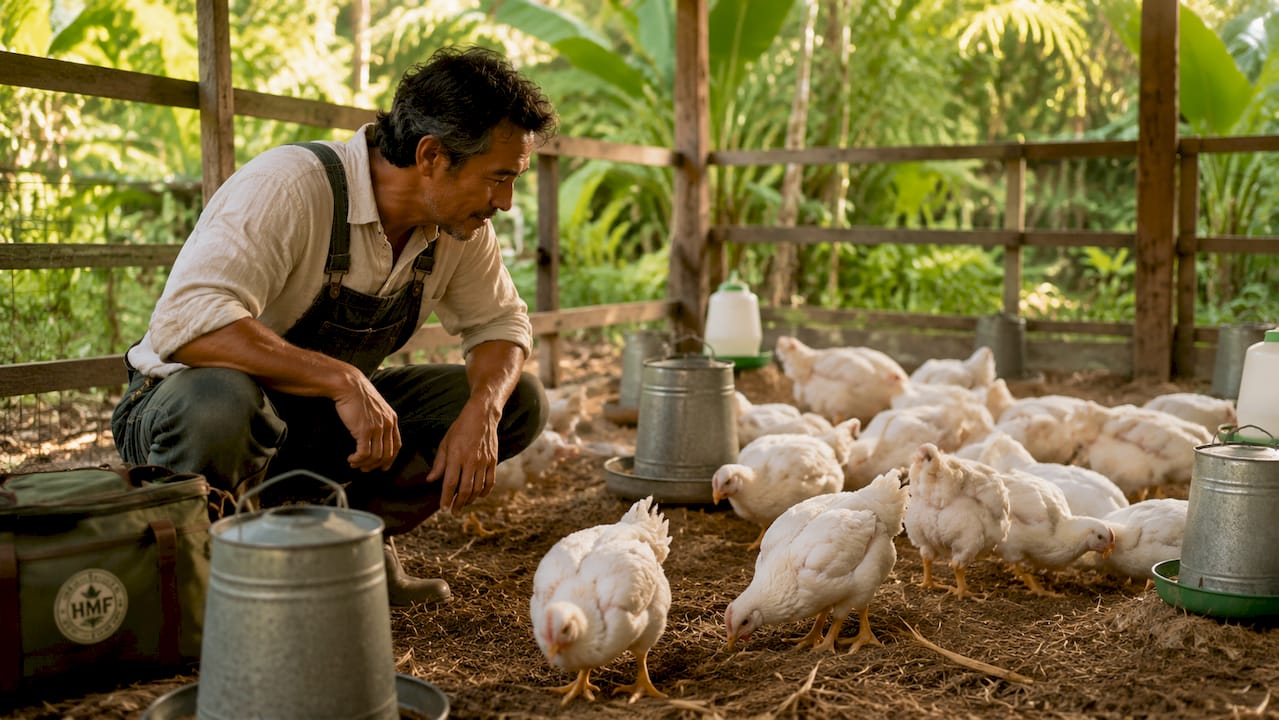
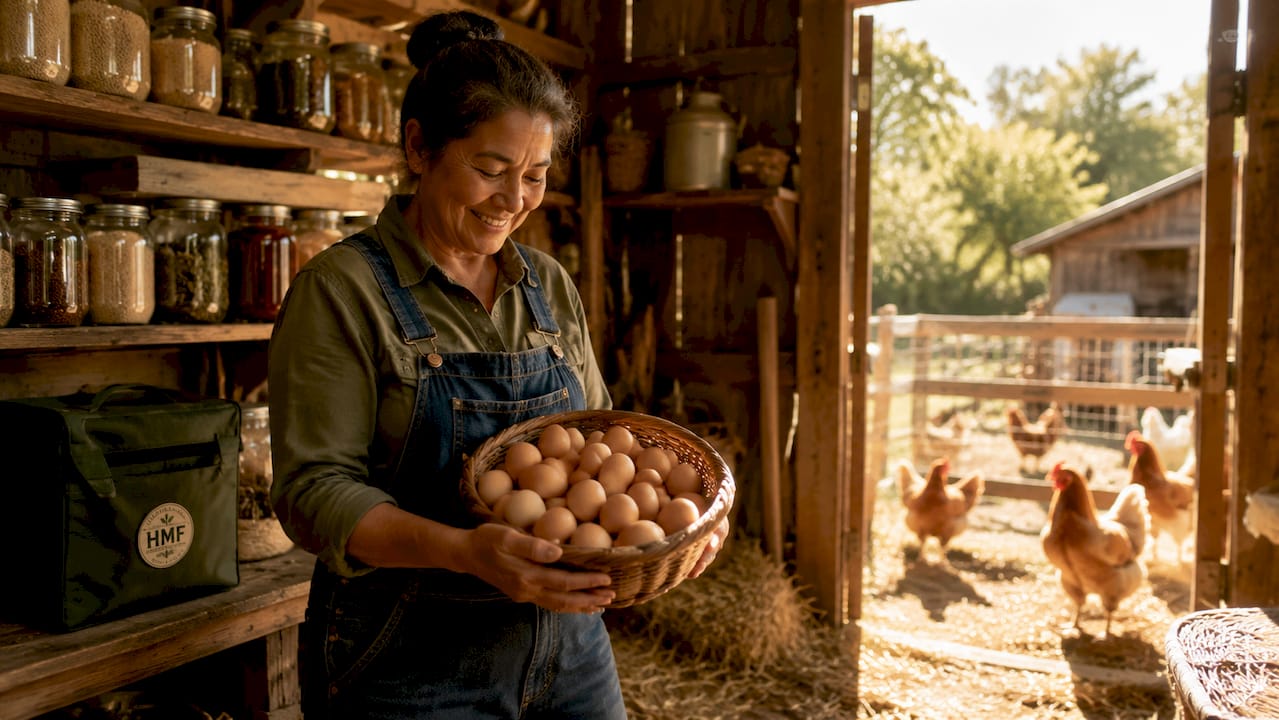
Heritage breeds are traditional livestock and poultry varieties that carry irreplaceable genetic traits built over centuries of natural selection and careful human stewardship. These animals represent living libraries of adaptation, disease resistance, and environmental fitness that no laboratory can recreate once lost. Why heritage breeds matter comes down to one hard fact: three-quarters of the world’s food supply depends on just 12 crops and 5 livestock species. That extreme narrowing of our food base makes heritage breed conservation one of the most urgent priorities in sustainable agriculture today.
Why heritage breeds matter for the environment
Heritage breeds do more than produce food. They actively support the ecosystems around them, and the numbers prove it.

Native and locally adapted breeds score significantly higher on ecosystem service provision compared to exotic commercial breeds, with scores of 5.97 and 4.10 respectively versus 2.90 for commercial lines. That gap means heritage breeds contribute more to soil health, water cycles, pollinator habitat, and rural community stability than their industrial counterparts. When you raise a Dominique chicken or a Tamworth pig, you are not just producing eggs or pork. You are maintaining a living system.
Heritage breeds also fit naturally into low-input and organic farming models. They forage more efficiently, tolerate local weather conditions, and require fewer purchased inputs like medicated feed or climate-controlled housing. This makes them a practical fit for farms that want to reduce their environmental footprint without sacrificing productivity. For island farming systems like those at Halemalufarms, where supply chains are long and inputs are expensive, that self-sufficiency is not a bonus. It is a necessity.
The ecological benefits of heritage livestock extend to rural livelihoods as well. Communities that maintain diverse breed populations are more resilient to market shocks, disease outbreaks, and climate disruptions. A single commercial hybrid flock wiped out by a new pathogen leaves a farmer with nothing. A farmer raising several heritage breeds with varied disease profiles has options.
- Soil health: Heritage breeds on pasture contribute organic matter and support microbial diversity through natural grazing patterns.
- Biodiversity support: Mixed heritage flocks create habitat variety that benefits insects, birds, and native plants.
- Water resilience: Breeds adapted to local rainfall patterns require less supplemental irrigation and watering infrastructure.
- Community stability: Heritage breed farming supports local hatcheries, feed producers, and direct markets rather than consolidated supply chains.
Pro Tip: If you are selecting a heritage breed for a humid tropical climate like Hawaiʻi, prioritize breeds with documented heat tolerance and foraging ability. Breeds like the Egyptian Fayoumi or the Buckeye were developed in climates with temperature extremes and tend to thrive where commercial hybrids struggle.
What makes heritage breed genetics so valuable?
The genetic case for preserving heritage breeds is the strongest argument of all. Up to 50% of an individual heritage breed’s biodiversity is unique and found nowhere else within the species. Every breed that disappears takes that genetic material with it permanently.
“Indigenous breed genomes contain traits like heat tolerance and disease resistance developed over centuries that industrial breeding programs cannot replicate once lost.” — Clauvisc Research on Indigenous Livestock
That is not a theoretical risk. It is already happening. As commercial hybrids have replaced traditional breeds across Asia, Africa, and Latin America, smallholder farmers have lost the biological tools they depended on for generations. When a new disease pressure arrives or a drought cycle extends, those farmers have no locally adapted genetics to fall back on.
Heritage breeds also give farmers a real tool for managing disease without antibiotics. Researchers at Washington State University found measurable differences in disease susceptibility among heritage chicken breeds to pathogens like Eimeria and Campylobacter. That means a farmer who selects the right heritage breed for their specific disease environment can reduce treatment costs and antibiotic reliance at the same time.
| Genetic Trait | Heritage Breeds | Commercial Hybrids |
|---|---|---|
| Heat tolerance | High in locally adapted breeds | Low, requires climate control |
| Disease resistance | Breed-specific, often strong | Bred for controlled environments |
| Foraging ability | High | Low |
| Genetic uniqueness | Up to 50% unique per breed | Narrow, standardized genome |
| Adaptability to change | High | Low |

The loss of these breeds is not just a conservation problem. It is a food security problem. Global demand for livestock products is projected to rise 70% by 2050. Meeting that demand through a narrowing genetic base is a fragile strategy. Heritage breeds are the backup system the global food supply cannot afford to lose.
Gene banks store frozen genetic material, but frozen samples cannot replace living populations. The most effective conservation outcomes come when animals are maintained actively on farms within communities. That means economic incentives and market access are not optional extras. They are the foundation of any real conservation strategy.
Heritage breeds vs. commercial breeds: what are the real trade-offs?
Choosing heritage breeds over commercial livestock is not a simple upgrade. It is a different farming model with real trade-offs that every farmer should understand before making the switch.
Commercial hybrids are bred for one thing: maximum output in controlled conditions. A Cornish Cross broiler reaches market weight in 6–8 weeks. A heritage breed like the Delaware or the Java takes 16–20 weeks or more. That slower growth means higher feed costs, more labor, and more land per pound of meat produced. Heritage breeds require more space and longer production cycles, which directly raises the cost per pound.
The market, however, rewards that difference. Farmers who sell heritage breed products through direct markets can secure price premiums 1.5 to 3 times higher than commodity prices. Consumers paying a premium for a heritage breed Thanksgiving turkey or a pasture-raised heritage egg are paying for flavor, story, and sustainability. That premium is real and growing as consumer awareness of food systems increases.
Pro Tip: Before committing to a heritage breed, research the direct markets available in your area. Farmers markets, CSA programs, and restaurant partnerships are the most reliable channels for capturing the premium that makes heritage breed farming economically viable. Check out the farmers market guide at Halemalufarms for practical selling strategies.
The disease resistance comparison also favors heritage breeds in outdoor and pasture systems. Commercial hybrids perform well in biosecure, climate-controlled environments. Put them on pasture in a humid tropical climate and their vulnerability to parasites and pathogens increases sharply. Heritage breeds selected for local conditions handle those pressures far better. The key word is “selected.” Not every heritage breed suits every farm. Matching breed to environment is the work.
| Factor | Heritage Breeds | Commercial Hybrids |
|---|---|---|
| Time to market | 16–20+ weeks | 6–8 weeks |
| Space requirements | High | Low |
| Feed conversion | Moderate | High |
| Market price potential | Premium (1.5–3x) | Commodity |
| Disease resilience (pasture) | High (breed-dependent) | Low |
| Genetic conservation value | High | Low |
How to choose and support heritage breeds on your farm
Getting started with heritage breeds takes planning, but the path is clear. Here is how to approach it whether you are a farmer, a homesteader, or a conscious consumer.
-
Match breed to climate and farm goals. A breed that thrives in Vermont winters will not necessarily perform in Hawaiʻi’s humidity. Research breeds developed in climates similar to yours. The Livestock Conservancy maintains a breed directory that includes climate suitability, production traits, and conservation status.
-
Start with one or two breeds. Spreading across too many breeds too quickly makes it hard to track performance and manage genetics. Pick one breed that fits your primary goal, whether that is egg production, meat, or dual purpose, and learn it well before expanding.
-
Connect with a reputable hatchery. Genetic quality matters. A heritage breed from a hatchery that selects for true breed standards will perform very differently from one bred loosely for appearance. Halemalufarms has focused on heritage breed poultry genetics since 2011, with breeds suited specifically for Hawaiʻi’s conditions.
-
Plan your market before you raise your first bird. Heritage breed farming only works economically if you have a buyer willing to pay the premium. Identify your farmers market, restaurant contact, or CSA customer base before you invest in infrastructure.
-
Support conservation through purchasing. If you are not a farmer, you can still support heritage breed preservation by buying directly from farms that raise them. Every purchase of a heritage breed product funds the living population that keeps those genetics viable. Duck breeding programs and other heritage livestock initiatives depend on consistent consumer demand to stay financially sustainable.
-
Document and share your results. Farmers who track breed performance in their specific environment contribute data that helps the whole community. Record growth rates, disease events, foraging behavior, and egg production. Share that information with your local agricultural extension office or breed association.
Key Takeaways
Heritage breeds are irreplaceable genetic resources that support food security, environmental health, and farm resilience. Losing them is permanent.
| Point | Details |
|---|---|
| Genetic uniqueness | Up to 50% of each breed’s biodiversity exists nowhere else, making every extinction permanent. |
| Ecosystem services | Native breeds score nearly twice as high as commercial breeds on ecosystem service provision. |
| Disease management | Heritage breeds enable farmers to reduce antibiotic use by selecting for breed-specific disease resistance. |
| Market premium | Direct-market farmers can earn 1.5 to 3 times commodity prices for heritage breed products. |
| Conservation through use | Living farm populations, not gene banks alone, are the most effective way to preserve heritage breeds long term. |
My honest take on heritage breeds after years of island farming
I have watched heritage breeds get dismissed as a hobby farmer’s indulgence for years. That framing frustrates me because it misses the point entirely.
On an island like Hawaiʻi, where 85% to 90% of food is imported, the argument for locally adapted, genetically diverse livestock is not romantic. It is practical. When supply chains break, and they do break, the farms that survive are the ones with animals that can forage, handle the climate, and resist local disease pressures without constant outside inputs. Commercial hybrids are not built for that reality.
What I have seen at Halemalufarms reinforces this. Heritage breeds take longer and cost more upfront. That is true. But they also forgive mistakes that would devastate a commercial flock. A heritage bird that gets out of the brooder into a rain shower does not die. It figures it out. That resilience has real value that does not show up in a feed conversion ratio.
The deeper issue is that most people do not realize how close we are to losing these breeds permanently. When a breed drops below a viable population threshold, recovery becomes nearly impossible without heroic intervention. We are not talking about a distant future risk. The Livestock Conservancy lists dozens of breeds as critical right now. Every farm that raises them, and every consumer who buys from those farms, is part of the solution.
Heritage breed farming is not a step backward. It is the most forward-thinking agricultural choice available to us.
— kai
Start your heritage breed flock with Halemalufarms
Halemalufarms has been raising and distributing heritage poultry throughout Hawaiʻi since 2011. We work with breeds selected for island conditions, including heat tolerance, foraging ability, and disease resilience in humid tropical environments.

Whether you are starting your first backyard flock or expanding a farm operation, we carry heritage breed chickens and layers suited for Hawaiʻi’s unique climate. We also offer educational resources, hatchery support, and community connections to help you succeed. Browse our full selection at Halemalufarms and find the breed that fits your land, your goals, and your values. Rooted in Hawaiʻi. Growing Our Future.
FAQ
What are heritage breeds exactly?
Heritage breeds are traditional livestock and poultry varieties developed over generations through natural selection and purposeful breeding. They retain traits like disease resistance, foraging ability, and climate adaptability that commercial hybrids have lost.
Why do heritage breeds matter for food security?
Three-quarters of the global food supply depends on just 12 crops and 5 livestock species. Heritage breeds hold the genetic diversity needed to adapt that narrow base to future disease pressures and climate shifts.
Are heritage breeds harder to raise than commercial breeds?
Heritage breeds require more space and longer grow-out periods than commercial hybrids. They are, however, more resilient in outdoor and pasture systems, particularly in climates where commercial breeds struggle.
Can heritage breed farming be profitable?
Yes. Farmers selling through direct markets can earn price premiums 1.5 to 3 times higher than commodity prices for heritage breed products. Profitability depends on matching breed selection to local market demand.
How can consumers support heritage breed conservation?
Buying directly from farms that raise heritage breeds funds the living populations that keep those genetics viable. Every purchase supports conservation more effectively than gene bank storage alone.
Recommended
- The Role of Duck Breeding Programs in Sustainable Farming – Your Local source for all things poultry
- Why Egg Production Matters Locally: Community Benefits – Your Local source for all things poultry
- Small hatchery guide: what local farmers need to know – Your Local source for all things poultry
- Heritage Breeds – Your Local source for all things poultry
Discover more from Your Local source for all things poultry
Subscribe to get the latest posts sent to your email.